
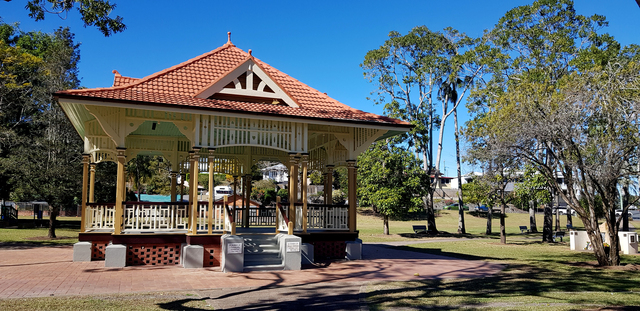
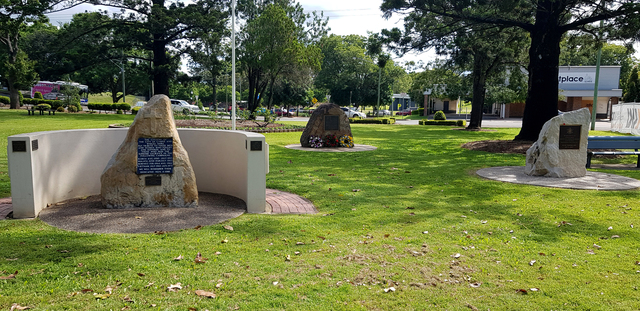
I write in response to the Gympie Regional Council’s reply to Gympie Today’s article of Friday 17 April 2026, “Rally respect row,” concerning my advocacy for appropriate respect to be shown to Gympie’s Fallen Soldiers Memorial Park.
The recent car rally event saw the War Memorial Park used as a major pedestrian thoroughfare to the rally’s VIP Lounge and as an access point to the Telstra Service Park in Nelson Reserve.
More concerningly, the memorial parklands were effectively allocated as a central spectator platform for viewing rally car speed trials and slide demonstrations conducted throughout the surrounding streets of the central business precinct.
This approach reflects a troubling misunderstanding of the status and purpose of this site.
Our community and State heritage-listed war memorial park should not be treated to a lesser standard by Council than that upheld by the Federal Government’s Office of Australian War Graves.
A place of such significance demands a “perpetuity” approach—one grounded in respectful community engagement, high standards of maintenance, and carefully considered change guided by qualified external experts.
Such an approach was clearly articulated in Council’s own 2018 Conservation Management Plan for Memorial Park.
Adopted on 24 October 2018, this comprehensive 180-page document established a long-term vision to preserve the park’s heritage significance and character.
It was developed with substantial input from key stakeholders, including the community, local businesses, and the RSL Sub-Branch, and was supported by the elected Council of the time, including Councillors Hartwig and Curran.
Yet, in October 2024, current councillors chose to disregard this Plan.
They endorsed changes under the broad “umbrella” of Council works to facilitate so-called “upgrades” to the park and adjoining lane in support of proposals associated with the Gympie RSL.
This decision effectively set aside a legally binding framework designed to protect the site’s integrity.
It must be clearly stated: Council plans are not casual guidelines.
They are formal, legally binding instruments intended to manage development, land use, and heritage conservation.
The Memorial Park Conservation Management Plan exists precisely to safeguard the environment—its trees, plantings, grasslands, and overall design of pathways and gardens—and to protect the solemn, early twentieth-century heritage fabric from the pressures of modern urban planning.
The park itself occupies land donated to the community during a time of national grief, for the express purpose of erecting a war memorial.
Upon its completion and dedication in 1921, it was handed to Council, debt free, for custodianship—not reinvention or modernization.
Council’s recent actions, including the use of the memorial park as part of a weekend motorsport event precinct, represent an alarming example of scope creep.
The imposition of a motorsport identity onto both the war memorial and the broader Gympie CBD—historically defined by its gold mining heritage demonstrates a disregard for the values of the wider community and the interests of all local businesses outside of such events.
Respect for our fallen should not be conditional, occasional, or overridden by convenience.
It must remain constant, visible, and upheld in every decision affecting this sacred space.
Tanya Easterby,
Gympie