
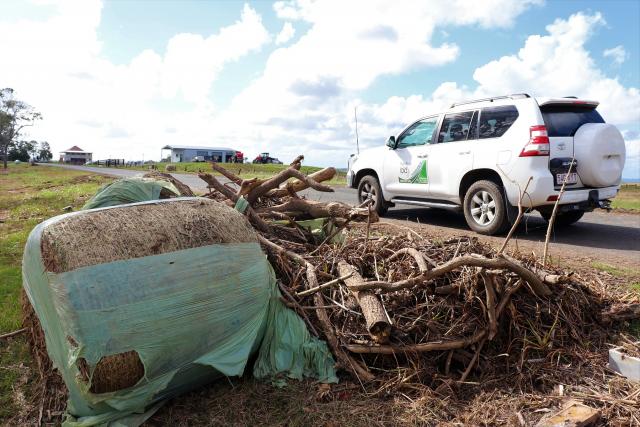
Rural Aid supports the National Rural Health Alliance (NRHA) and its call for better funding for the bush in the wake of new research showing rural Australians are missing out on $6.5 billion annually in healthcare access.
Rural Aid CEO John Warlters said living and working in the bush was challenging at the best of times and too often people in rural communities were forced to sacrifice access to basic services.
This had become an ingrained, but unreasonable, expectation of what was required if someone chose to live outside of a metropolitan area.
“The NRHA, through its research, has quantified the gap. Now we call on government to act swiftly to close the gap,” Mr Warlters said.
Rural Aid is well-known for the assistance it provides farming families before, during and after disaster – including drought, bushfires and floods.
This includes mental health and wellbeing support via its team of professional accredited counsellors in communities across rural Australia.
The latest data, revealed in an independent Nous Group report commissioned by the NRHA reflects the urgent need for an overarching National Rural Health Strategy to bring scattered rural health initiatives under one umbrella.
Alliance Chief Executive Susi Tegen said the report looked at health spending from a patient’s perspective, reflecting the alarming day-to-day realities for rural Australians unable to access equitable care.
“Over 7 million people, who make up nearly a third of Australia’s population, experience a greater burden from illness and early death, in part due to inadequate funding for their healthcare. This is despite the significant contribution they make to Australia’s economy,” she said.
Resources and rural industries alone generate around 80 per cent of Australia’s exports, excluding the extra contribution of rural-based services and manufacturing.
The value of agriculture, fisheries and forestry exports is $76 billion, while commodities exports are worth $497 billion – a collective value to the nation of over $500 billion, courtesy of rural Australia.
Rural people experience a triple health disadvantage: poorer circumstances in terms of social determinants of health, a lack of service availability, and higher costs of access and delivery, all resulting in poor health outcomes.
“Although the government invests in workforce initiatives and several measures are in place to support rural health, these need to be augmented and continued as they still do not sufficiently improve service availability and a patient’s access to healthcare.
“Social determinants of health negatively impact rural people, who are sick for longer periods and end up in hospitals because of inadequate primary care access to doctors, nurses and other health workers. Proper funding in this regard would keep people well and out of the expensive and overburdened hospital system.
“Rural communities need government to be more flexible and introduce block or genuine support funding to provide multidisciplinary care for patients. These communities know how to collaborate – they do it every day – but costs of access and delivery are higher, so the delivery of healthcare will be different and broader. It does not fit into the model available to urban people,” Ms Tegen said.
The Alliance was calling for the funding of a place-based multidisciplinary model of primary health care that gives the flexibility to engage communities and address local needs in partnership.
“Communities need access to healthcare in their localities. To achieve this, we urge government to add to existing city-based and hybrid (city/rural) training, with a flipped model of exceptional rural medical and allied training, including nurse training. This would make training in cities the exception and enable students living rurally to train in their own communities.
“Why should people living in rural Australia pay twice or thrice the amount for the same health care available in cities, yet still have poorer health? Why do they need to fundraise to access a service that should be provided through their taxes? This is the unfortunate reality faced by many rural Australians,” Ms Tegen said.
Investing in rural areas would have the additional benefit of reducing costs in the hospital sector and emergency departments but, more importantly, it would increase the already significant economic contribution of rural communities to Australia’s wellbeing.